
 January 24, 2026
 11 min read
In the world of modern engineering, data is your most valuable asset. However, much of this data is still trapped in physical archives, legacy instruction books, and oversized blueprints. This physical bottleneck slows down innovation and increases the risk of information loss. This is why leading firms are adopting Technical Manual OCR to bridge the gap between paper archives and high-tech digital systems.
By choosing to digitize technical docs, you are not just saving space; you are transforming static images into actionable, structured data. In this guide, we explore how Technical Manual OCR is revolutionizing engineering drawing digitalization and why it is essential for your firm’s success.
1. Why You Must Digitize Technical Docs Now
Large paper archives are a major liability in today’s fast-paced construction and engineering sectors. Engineers often waste hours searching through dusty boxes to find a single specification or safety protocol. This inefficiency directly impacts the project’s bottom line.
Implementing a Technical Manual OCR strategy allows your team to move away from these physical limits. When you digitize technical docs, you ensure that critical information is backed up in the cloud, protected from physical damage, and compliant with international standards such as ISO 9001 Quality Management
2. High-Precision Text Extraction via Technical Manual OCR
Standard OCR tools often fail when faced with the dense layouts and fine print found in engineering catalogs. A professional Technical Manual OCR engine is specifically designed to handle these complexities.
It doesn’t just “see” text; it recognizes the structure of parts lists, technical specs, and safety warnings. This high-precision extraction is the first step in creating searchable technical manuals that act as a digital brain for your entire maintenance crew and engineering team.
3. Engineering Drawing OCR: Handling Blueprints and Site Maps
Construction drawings and site maps present a unique challenge due to their scale and the use of specialized symbols. Standard scanning tools cannot interpret the lines and icons on a blueprint, but Engineering Drawing OCR can.
This technology identifies circuits, valves, and structural labels within a drawing. By using Engineering Drawing OCR, you turn a flat image into an intelligent digital asset. This allows workers on-site to click on a symbol in their digital viewer and instantly see its technical specifications.
4. The Power of Blueprint to CAD Conversion
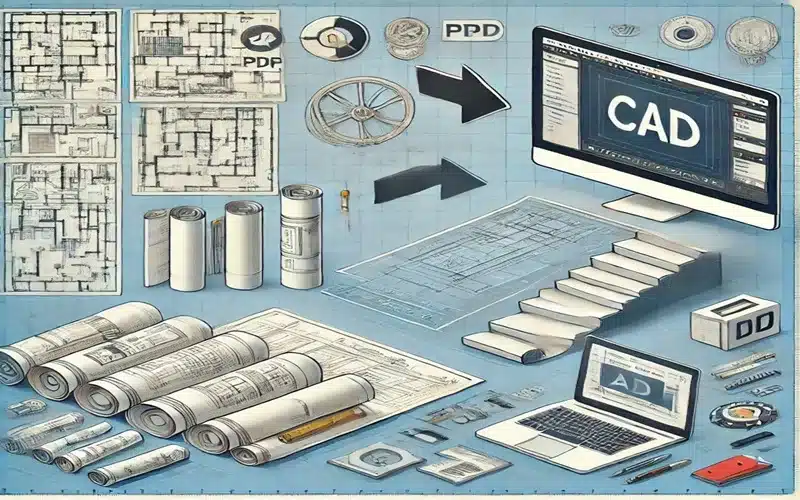
For many engineers, the ultimate goal of digitalization is the blueprint to CAD workflow. Instead of spending days re-drawing an old site map by hand, our Engineering Drawing OCR allows for a rapid transition from blueprint to CAD.
This process extracts the geometry and dimensions with 99.9% accuracy, providing a solid foundation for new modifications. Accuracy in this phase is vital; even a small error in the blueprint to CAD process can lead to structural issues during the construction phase.
5. Creating Searchable Technical Manuals for Field Workers
One of the biggest benefits of Technical Manual OCR is the empowerment of field workers. When you have searchable technical manuals, a technician in the field can search for a specific part number or troubleshooting step on their tablet.
Instead of flipping through a 500-page book, they get the answer in seconds. This speed reduces machine downtime and ensures that every repair is performed according to the official manufacturer’s instructions found in the searchable technical manuals.
6. Overcoming Digitalization Challenges: Damaged Docs and Handwriting
Not every document is in perfect condition. Many historical blueprints are faded, wrinkled, or contain hand-written notes in the margins. Modern Technical Manual OCR uses advanced AI filters to “repair” these images digitally before extraction.
Handwriting recognition is also a critical feature. Often, the most important project changes are written by hand on a job site. A robust Technical Manual OCR system ensures these notes are captured and indexed along with the printed text, preserving the full history of the project.
7. The Future of Technical OCR: AI and Digital Twins
The industry is moving toward “Digital Twins”—3D digital representations of physical buildings. The data extracted through Engineering Drawing OCR is the essential foundation for these models.
As AI continues to evolve, Technical Manual OCR will become even more automated. In the future, your system will be able to find design flaws across thousands of drawings simultaneously by comparing the digitalized data. By deciding to digitize technical docs today, you are preparing your company for the next era of engineering intelligence.
Conclusion: Transform Your Archive with Technical Manual OCR
Digitalization is no longer optional; it is the industry standard. Utilizing Technical Manual OCR is the most effective way to manage heavy technical archives, reduce storage costs, and improve team safety.
Searchable technical manuals and Engineering Drawing OCR give your team the power to find answers instantly, keeping your projects on time and under budget. Don’t let your most valuable data stay trapped in old, static files. Start your journey with pdftoexcelconverter.ai and see the difference that high-precision AI can make.