 January 19, 2026
 11 min read
In the high-speed worlds of insurance, logistics, and transportation, manual data entry is a significant bottleneck. Traditionally, onboarding a new driver or processing an insurance claim involved hand-typing sensitive details from a physical card—a process prone to human error and delays. Today, Driver’s License OCR (Optical Character Recognition) technology is the “fast lane” that turns physical identity documents into structured digital data instantly.
By choosing to scan driver’s license cards using AI-powered tools, firms can achieve 100% data accuracy while improving the user experience. In this comprehensive guide, we explore how Driver’s License OCR is transforming modern business ecosystems.
1. Streamlining Onboarding in Insurance and Car Rentals
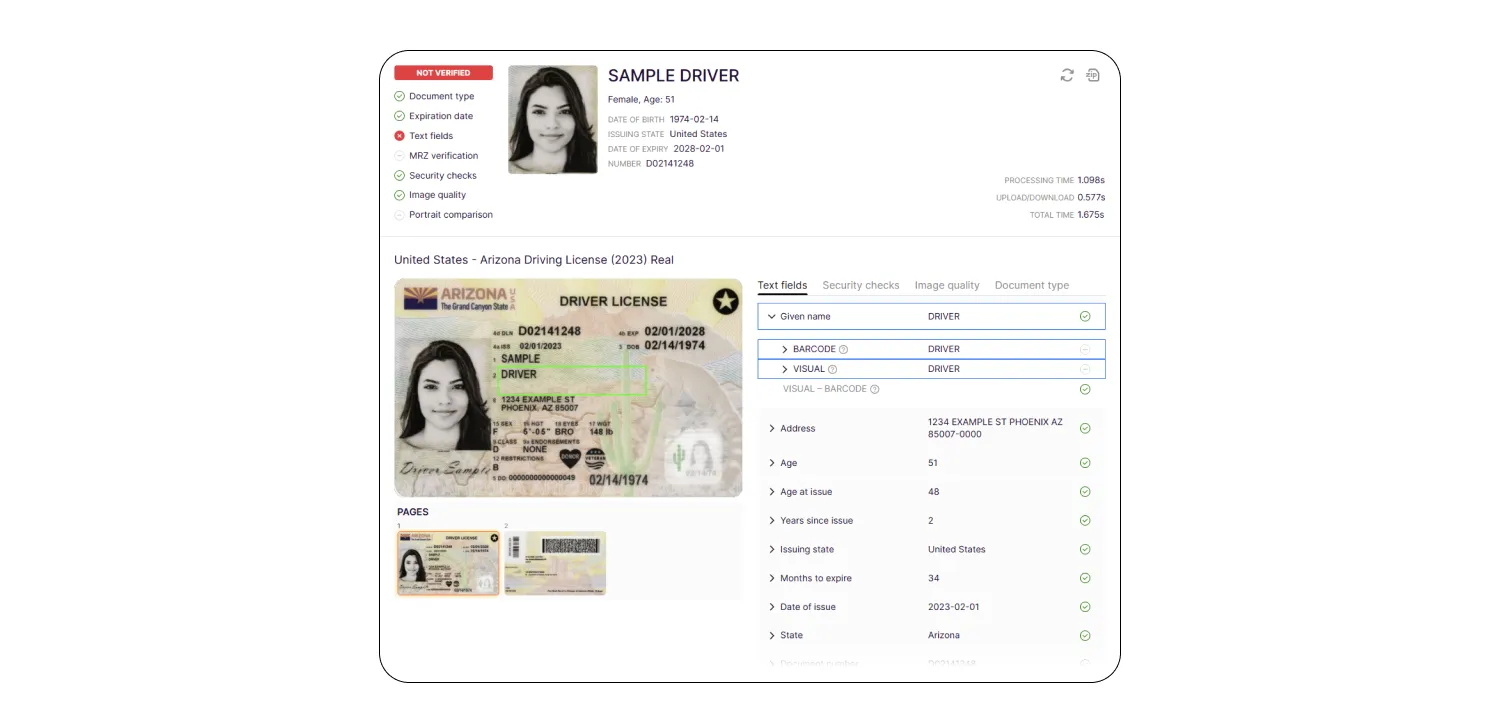
The first impression is critical. In car rental apps or insurance onboarding, long wait times lead to high drop-off rates. Driver’s License OCR reduces these wait times significantly. Instead of asking users to type their license number, address, and expiry date, they can simply scan driver’s license details via their mobile camera.
This automated DL scanning leads to higher conversion rates and a seamless user experience. By the time the user finishes taking a photo, the app has already populated the database, allowing for instant identity document verification.
2. Enhancing Accuracy and Identity Document Verification
Human error is a silent risk. A single typo in a license number can lead to expensive legal mistakes or insurance policy mismatches. Driver’s License OCR ensures that every field—from the full name to the birth date—is captured exactly as it appears on the document.
Furthermore, modern identity document verification goes beyond just reading text. Advanced AI can detect if a card has been tampered with or if the holograms are missing, helping businesses prevent fraud before it results in financial damage.
3. Optimizing Fleet Management and Logistics
Managing thousands of corporate drivers is a massive administrative task. Logistics companies use DL scanning to automate their driver databases. Managers can see at a glance if every driver holds a valid and legal license for their specific vehicle category (A1, B2, C, etc.).
When you extract DL info automatically, you also capture expiry dates. Your system can then set automated alerts to notify drivers when it is time for a renewal. This proactive approach ensures that your fleet remains in total legal compliance with road safety standards.
4. How Driver’s License OCR Works (The Technical Process)
The transformation from a plastic card to digital data follows a logical 4-step flow:
-
Image Acquisition: The user takes a photo or scans the driver’s license card.
-
AI Image Cleaning: The software removes shadows, glare, and background noise to ensure the text is clear.
-
Field Extraction: The OCR engine identifies specific spots on the card to extract DL info like the unique ID number, name, and address.
-
Semantic Verification: The system cross-checks the extracted data (e.g., verifying if the birth date format is logical) to ensure total validity.
5. Overcoming Technical Challenges with AI

Handling international license formats or cards with varying layouts is a common challenge. Older systems often fail, but modern Driver’s License OCR is trained on diverse global datasets. Whether it is an old paper-based license or a modern plastic card with QR codes, the AI adapts to ensure consistent results.
Data security is the most critical pillar of DL scanning. Professional platforms follow strict privacy laws (like GDPR) to ensure that the personal identity data extracted remains encrypted and protected from unauthorized access.
Strategic Impact: Comparison of Manual vs. OCR Methods
| Feature | Manual Data Entry | Driver’s License OCR |
| Speed | 2-5 minutes per card | < 2 seconds |
| Accuracy | High risk of typos | 99% + Accuracy |
| Security | Physical copies/Unsecured | End-to-end Encryption |
| User Experience | Slow and frustrating | Instant and modern |
FAQ: Frequently Asked Questions
Can Driver’s License OCR read barcodes?
Yes, modern DL scanning tools can decode PDF417 barcodes and QR codes on the back of licenses to extract DL info that might be hidden or encoded.
Does it work with blurry photos?
While a clear photo is best, advanced Driver’s License OCR utilizes AI filters to sharpen images and remove glare, making it highly reliable even in low-light environments.
Is identity document verification legal?
Absolutely. Most industries use it to comply with “Know Your Customer” (KYC) and Anti-Money Laundering (AML) regulations, provided the data is handled according to privacy laws.
Conclusion: Driving Efficiency through Automation
Modern business moves too fast for old manual methods. Driver’s License OCR is the engine that drives efficiency in insurance, transport, and logistics. It creates a seamless synergy between speed and accuracy, turning identity documents into a strategic asset.
Don’t let manual paperwork hold your firm back. Start your digital transformation today and watch your operational efficiency grow every month.
Why pdftoexcelconverter.ai is The Right Solution For You?
At pdftoexcelconverter.ai, we provide the industry’s most powerful Driver’s License OCR technology. We help you scan driver’s license cards with incredible speed, ensuring that you extract DL info with perfect precision every time.
Our complete identity document verification system is built to protect your business from fraud while keeping your data secure and compliant. Whether you manage a massive fleet or a busy insurance firm, our DL scanning solution is designed to scale with your needs. Trust pdftoexcelconverter.ai to transform your workflows into a modern success story.