 January 9, 2026
 11 min read
In the fast-paced world of global trade, speed is a competitive necessity. However, manual customs data entry remains one of the most significant bottlenecks in the global supply chain. When goods are stuck at the port due to slow paperwork, it leads to congestion, increased storage fees, and missed deadlines. To overcome these hurdles, forward-thinking logistics firms are turning to automated customs clearance solutions.
By choosing to digitize customs forms, businesses can reduce clearance times from days to mere minutes. In this guide, we explore how modern technology is accelerating global trade through efficient customs data entry automation.
1. The Hidden Risks of Manual Customs Data Entry
Manual customs data entry is more than just slow—it is inherently risky. Human error during the transcription of import export docs can lead to devastating consequences. A single typo in an HS (Harmonized System) code or an incorrect item value can result in heavy fines, cargo seizures, or long-term audits by port authorities.
Beyond legal risks, manual work drives up operational costs. Staff members spend hours typing data from invoices and packing lists instead of focusing on logistics strategy. If your business relies on hand-typed entry, port penalties like demurrage and detention fees will quickly erode your yearly profits.
2. Powering Automation with Customs Declaration OCR
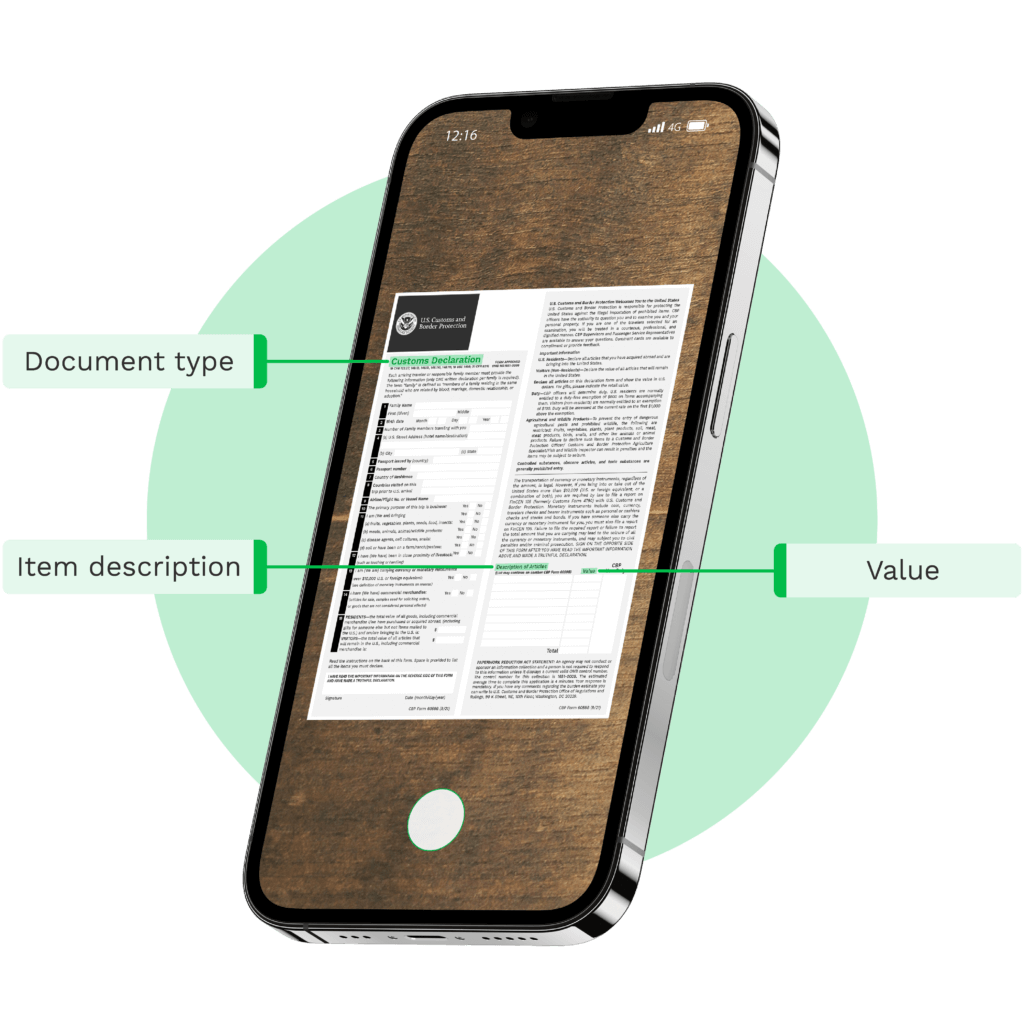
The backbone of frictionless trade is Customs Declaration OCR (Optical Character Recognition). This AI-driven technology is designed to read and interpret complex international invoices with incredible speed.
Unlike basic scanners, Customs Declaration OCR uses deep learning to identify and extract key data points such as vendor details, currency values, and weights automatically. This ensures that the information flowing into your system is accurate and courtroom-ready, significantly reducing the burden of manual customs data entry.
3. The 4-Step Automated Customs Workflow
Transforming your import export docs into digital declarations follows a structured, automated journey:
-
Document Ingestion: Securely upload your digital or scanned files to the platform.
-
Intelligent Extraction: The Customs Declaration OCR engine identifies HS codes and transaction values instantly.
-
Validation & Cross-Checking: The AI ensures the invoice matches the packing list and shipping contract, ensuring consistency.
-
Submission: The data is pushed directly into the official port authority platform, completing the automated customs clearance process without a single keystroke.
4. Strategic Benefits: Speed, Accuracy, and Compliance
The advantages of choosing to digitize customs forms are clear and tangible:
-
Reduced Clearance Time: Goods move past borders faster, helping you avoid port congestion.
-
Enhanced Accuracy: Clean data keeps your shipments in the “Green Channel,” minimizing physical inspections by officers.
-
Cost Efficiency: Lower the cost per declaration by eliminating repetitive manual tasks.
-
Regulatory Compliance: Stay up to date with international trade standards such as the World Customs Organization (WCO).
5. Integrating with the Logistics Ecosystem
Your customs data entry system shouldn’t exist in a vacuum. Modern automation tools integrate seamlessly with ERP (Enterprise Resource Planning) and TMS (Transport Management Systems) like SAP or Oracle.
This connectivity allows your digital import export docs to move through every department in real-time. From the warehouse to the finance team, everyone stays updated on the status of the cargo, providing a level of visibility that is only possible through automated customs clearance.
6. Choosing the Right Customs Automation Solution
When evaluating a partner to help you digitize customs forms, look for these critical features:
-
99% Extraction Accuracy: Precision is non-negotiable for customs compliance.
-
Support for Local Regulations: The software must understand the specific rules and languages of your local customs office.
-
Enterprise-Grade Security: Ensure the tool follows GDPR or SOC2 standards to protect your sensitive trade secrets.
-
Scalability: The system must be able to handle high volumes during peak shipping seasons without performance lag.
7. The Future of Frictionless Borders
We are moving toward a future where every customs data entry task is invisible and autonomous. AI-driven systems are now learning to predict tax classifications based on historical data, making the border experience almost entirely frictionless.
Logistics firms that adopt these technologies early will lead the market, while those stuck in paper-heavy workflows will struggle to compete. The digital trade revolution is here, and it starts with the simple step of automating your customs declarations.
Conclusion: Lead the Trade Revolution
Efficiency is the most valuable currency in the shipping world. Manual customs data entry is a weight that holds your business back from its full potential. By embracing automated customs clearance and choosing to digitize customs forms, you ensure that your cargo moves as fast as the modern market demands.
Don’t let your profits get stuck at the port. Invest in the future of trade today and experience the power of digital logistics.
Why pdftoexcelconverter.ai is The Right Solution For You?
At pdftoexcelconverter.ai, we are committed to making global trade smarter and faster. Our platform utilizes state-of-the-art Customs Declaration OCR to revolutionize your customs data entry workflow.
We help you digitize customs forms in seconds, ensuring that your import export docs are always accurate and compliant. Our system is built for automated customs clearance, providing the high precision and security required to navigate the world’s most complex borders. Choose pdftoexcelconverter.ai as your partner to clear cargo faster and grow your logistics business with confidence.